Springs You Can Swim In That Aren't State Parks
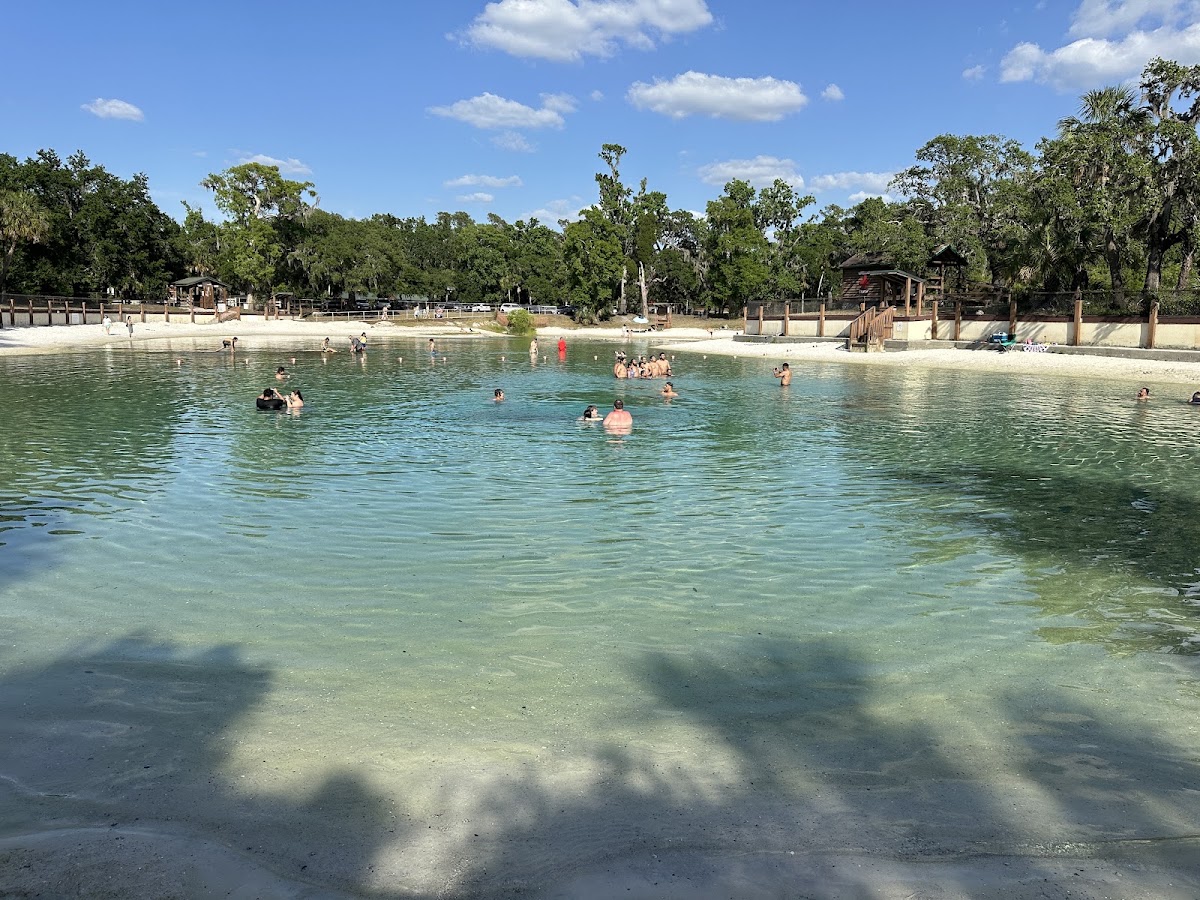
The springs you hear about first are state parks, and they earn the attention. They are also the ones with reservation windows, capacity limits and a lot that fills before nine in the morning. Florida swims in more places than that. Counties run spring parks, the U.S. Forest Service runs a cluster of them in the Ocala National Forest, and a handful are privately operated - and the water is the same cold, clear spring water as the famous ones.
Here is that second layer, region by region. No state parks in this list on purpose: the springs inside state parks, including the six our state-park article covers, are deliberately left to that piece.
Tampa Bay and the Nature Coast
- Lithia Springs Regional Park, Lithia - a Hillsborough County park built around a 72-degree natural spring, with a spring-run swim area, 44 tent and RV campsites, and boardwalks and trails along the Alafia River.
- Hunter Springs Park, Crystal River - the city's public spring park on Kings Bay, with a sandy beach stepped into 72-degree spring water, a kayak launch, a boardwalk, and manatee habitat in view.
- Eureka Springs Park, Tampa - the other kind of spring: Hillsborough County's 31-acre botanical park is built around a natural spring, with boardwalk trails past the spring head, butterfly gardens and exotic plants. A camera stop rather than a dip.
Central Florida, outside the state parks
- Kelly Park - Rock Springs, Apopka - one of Central Florida's best-known tube floats. The 68-degree water rises at the headspring and drifts a short, clear run through cypress and palm hammocks. It is a natural spring run, not a built water park, and it is day-use and first-come: Orange County closes the swim area when the park hits capacity and posts that on the park page.
- Gemini Springs Park, DeBary - a 260-acre Volusia County day-use park where two natural springs feed a swimming lake, with boardwalks, nature trails, a fishing pier and a splash area.
The Ocala National Forest springs
These four are Forest Service recreation areas rather than state parks, which is exactly why the busiest weekends hit differently: the entrance is a gate rather than a timed reservation, and the Forest Service runs the sites itself.
- Silver Glen Springs Recreation Area, Salt Springs - a clear, spring-fed swimming hole with a sandy bottom, a short boardwalk, picnic pavilions, and a boat ramp onto Lake George for the Silver Glen Run.
- Salt Springs Recreation Area, Fort McCoy - a 200-plus-site campground with RV hookups around a 72-degree mineral spring swimming area, a boat ramp for fishing Lake George and direct access to the St. Johns River.
- Alexander Springs, Altoona - a first-magnitude spring with a broad shallow basin, clear 72-degree water, fish, and spring vegetation you can see straight through. It is a Forest Service recreation area, so expect a gate rather than a reservation screen.
- Juniper Springs Recreation Area, Silver Springs - the classic: a 72-degree crystal spring, a 71-site campground, the historic Juniper Springs swimming pool, and the put-in for the 7-mile Juniper Run canoe trail.
The Suwannee and Santa Fe country
- Ginnie Springs, High Springs - seven 72-degree springs feed the Santa Fe River with legendary clarity, limestone ledges and fish habitat. Privately operated with camping on site, and the one place on this list with a real cave-diving scene, so expect current and overhead environments to be signed and gated.
- Devil's Den Spring, Williston - a 72-degree underground limestone cavern, which makes the snorkeling genuinely different from a spring run: you are floating over prehistoric rock formations rather than drifting a creek. Privately operated with controlled entry.
- Devil's Ear Spring, High Springs - a famous cave-diving spring with a large boil and a cavern entrance, inside the Ginnie Springs complex, so entry is through that operator and the cavern is for certified cave and cavern divers only.
- Poe Springs Park, High Springs - an Alachua County park on the Santa Fe River with a spring-fed swim area, picnic tables and a canoe launch. A low-key dip rather than an event.
- Hart Springs Park, Bell - a Gilchrist County spring park on the Suwannee with a spring-fed pool area, a boardwalk and camping. Summer weekends fill fast, so treat a midweek visit as the reward.
- Little River Springs, O'Brien - a Suwannee County spring on the Little River with a clear boil, a swim area and picnic grounds. A proper swimming hole with no development around it.
- Rum Island Springs County Park, Fort White - a Columbia County park on the Santa Fe where spring water wells up near the bank. Swimmers love the clarity and the rope swings, and paddlers use it as a river stop.
The Panhandle
- Vortex Spring, Ponce de Leon - a private 200-foot-diameter, 68-degree spring basin with platforms at 15, 25 and 60 feet, which is why it is the Panhandle's best-known dive site as well as a swimming and camping stop. Certified divers check in at the dive shop for tank fills; swimmers go through the gate.
- Morrison Springs, Ponce de Leon - a 45-foot-deep basin under a cypress boardwalk on Morrison Springs Road, popular with snorkelers and scuba divers. Park in the county lot, walk the boardwalk to the swim platform, and bring your own gear - there are no lifeguards here.
Southwest Florida's warm one
Warm Mineral Springs Park in North Port is the outlier of the whole list, and the reason it is worth the drive: it is Florida's only natural warm mineral spring, an 87-degree artesian pool in a 200-foot sink, with a spa and cafe on the same property. Warm is the point - this is the one you visit in January.
On cost, and on the things that change
We are not going to hand you a price list here, and that is a deliberate choice. These springs are run by three different kinds of operator - county park departments, the U.S. Forest Service, and private resorts - and each sets its own day-use rate, some per vehicle and some per person. A rate read this week can change next season. Our listings carry a price only where the operator publishes one, so check the spring's own page before you drive, and expect a gate fee rather than a ticket window.
Opening hours are the other thing we will not guess at, because these change with the season and with staffing. Check the operator's own page or call. What we can tell you is what the water is like, and how each spot tends to behave:
- Arrive early at the county parks. Kelly Park is day-use and first-come, and its swim area closes once the park reaches capacity - on a summer weekend that is a morning decision, not an afternoon one.
- Cold water is a real shock, and it never changes with the air temperature. The springs here that publish a number are 68 to 72 degrees year round; Warm Mineral is the 87-degree exception. Wonderful in August, genuinely cold in February.
- Bring water shoes and a mask. Limestone ledges and spring runs are hard on bare feet, and the visibility is the whole reason you came.
- Manatees are protected in Florida by the Florida Fish and Wildlife Conservation Commission (FWC), which sets the rules and publishes viewing guidelines - read them before you share water with one. Hunter Springs in Crystal River looks out on manatee habitat.
- Cave country is not beginner country. Ginnie Springs, Devil's Den and Devil's Ear all have cavern or cave systems, and those stay behind certification and, in places, gated entry.
- Swim areas close. County parks shut a swim area for water quality or staffing and reopen it when the test or the lifeguard roster says so, and they post that on the park page. That is the one thing worth checking the morning you go.
Every spring here has a full card in My FL Guide with its address, what it is best for, and the honest notes - which ones have a swim area, which are paddle-only, which have camping. Pick a region, filter for springs, and plan the drive.
Explore it yourself
Find every verified listing, beach, park and event with My FL Guide — your first 24 hours are free (10 listings), then $4.99 for a 10-day pass, $5.99 monthly or $54.99 annual.
Open My FL Guide →24-hour free trial · then $4.99 10-day · $5.99 monthly · $54.99 annual